
Mountain Day: Wilderness Survival
At Peak School, learning doesn’t stop when students step outside the classroom, in many cases, that’s where it truly begins.
Yesterday’s Mountain Day brought together students in grades 6–11 for a hands-on wilderness survival experience designed to build confidence, collaboration, and real-world problem-solving skills. Set in a realistic mountain scenario, students were challenged to think critically, communicate clearly, and rely on one another in unfamiliar conditions.
The Scenario: When Plans Change in the Backcountry
Students were presented with a situation that could happen to any skier or outdoor enthusiast: the final chairlift has already closed, daylight is fading, and the group has found themselves stuck in a gully.
With limited daylight and dropping temperatures, students were tasked with answering an essential question:
What do we need to survive the night safely as a team?
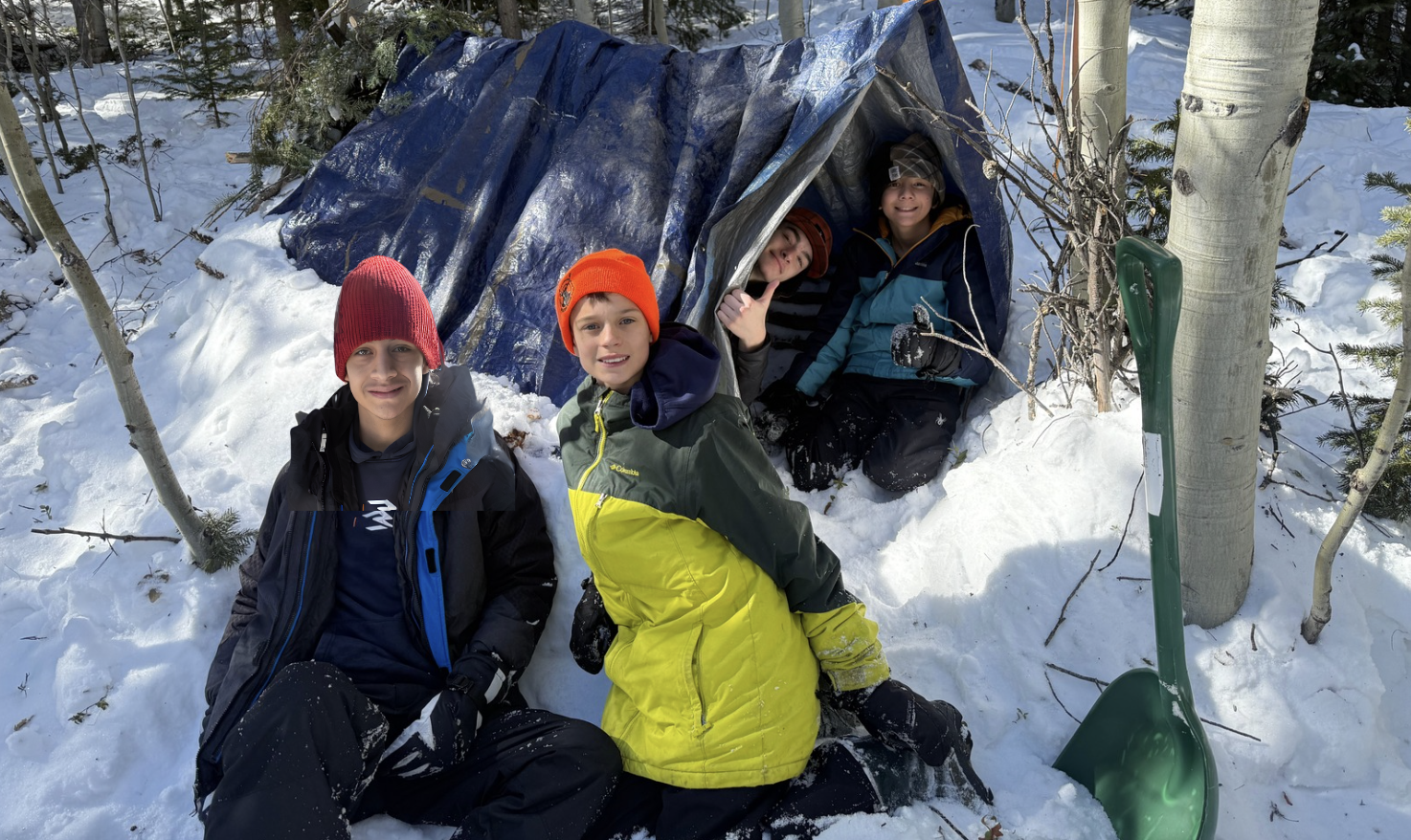
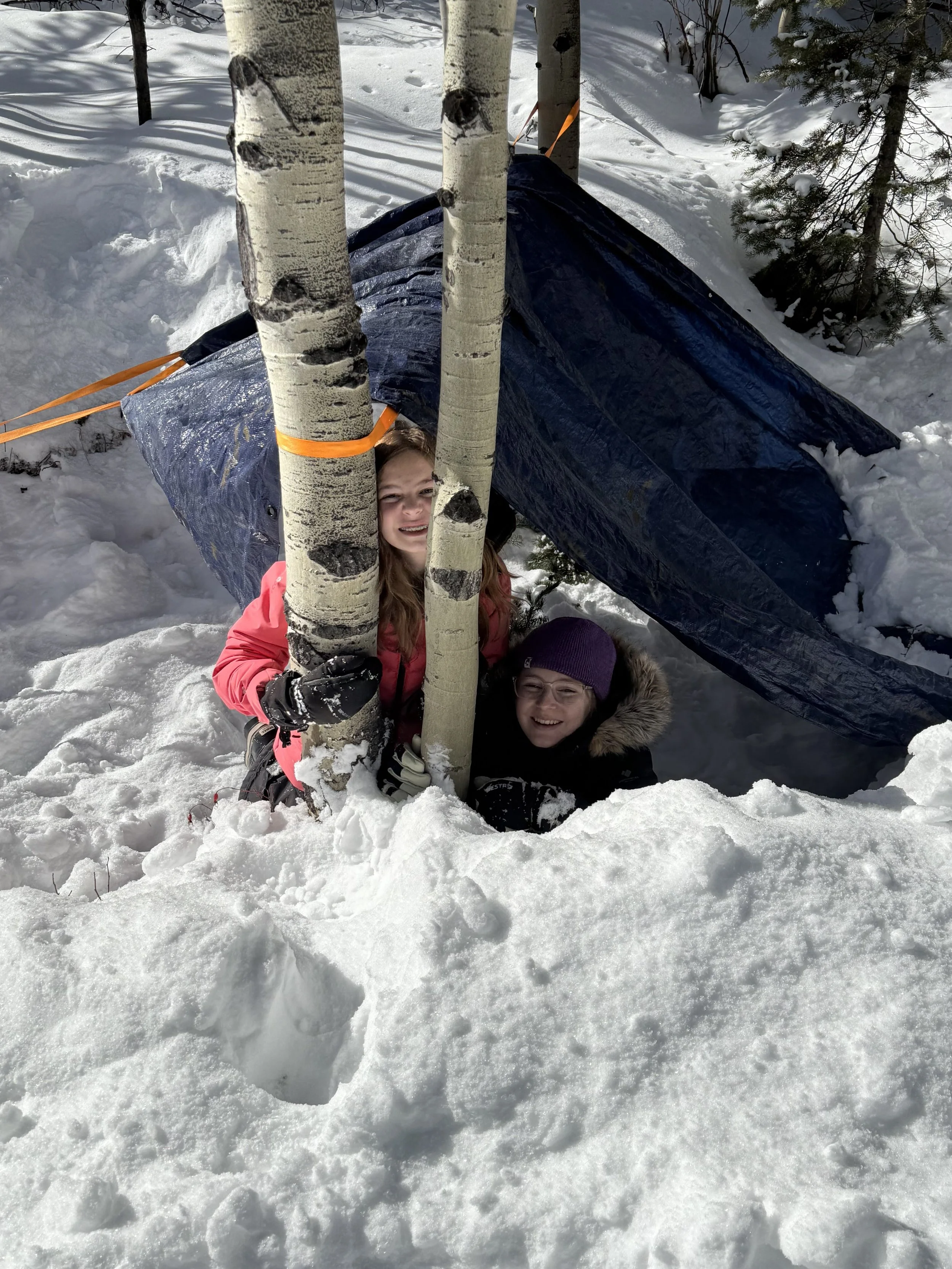
Armed with only a rope, tarp, and shovel in their backpacks, each group had one hour to design and build a snow shelter large enough to fit everyone. Along the way, they learned what makes a snow shelter effective - insulation, structural integrity, airflow, and teamwork - while adapting their plan as challenges arose.
Challenge Two: One Match, One Fire
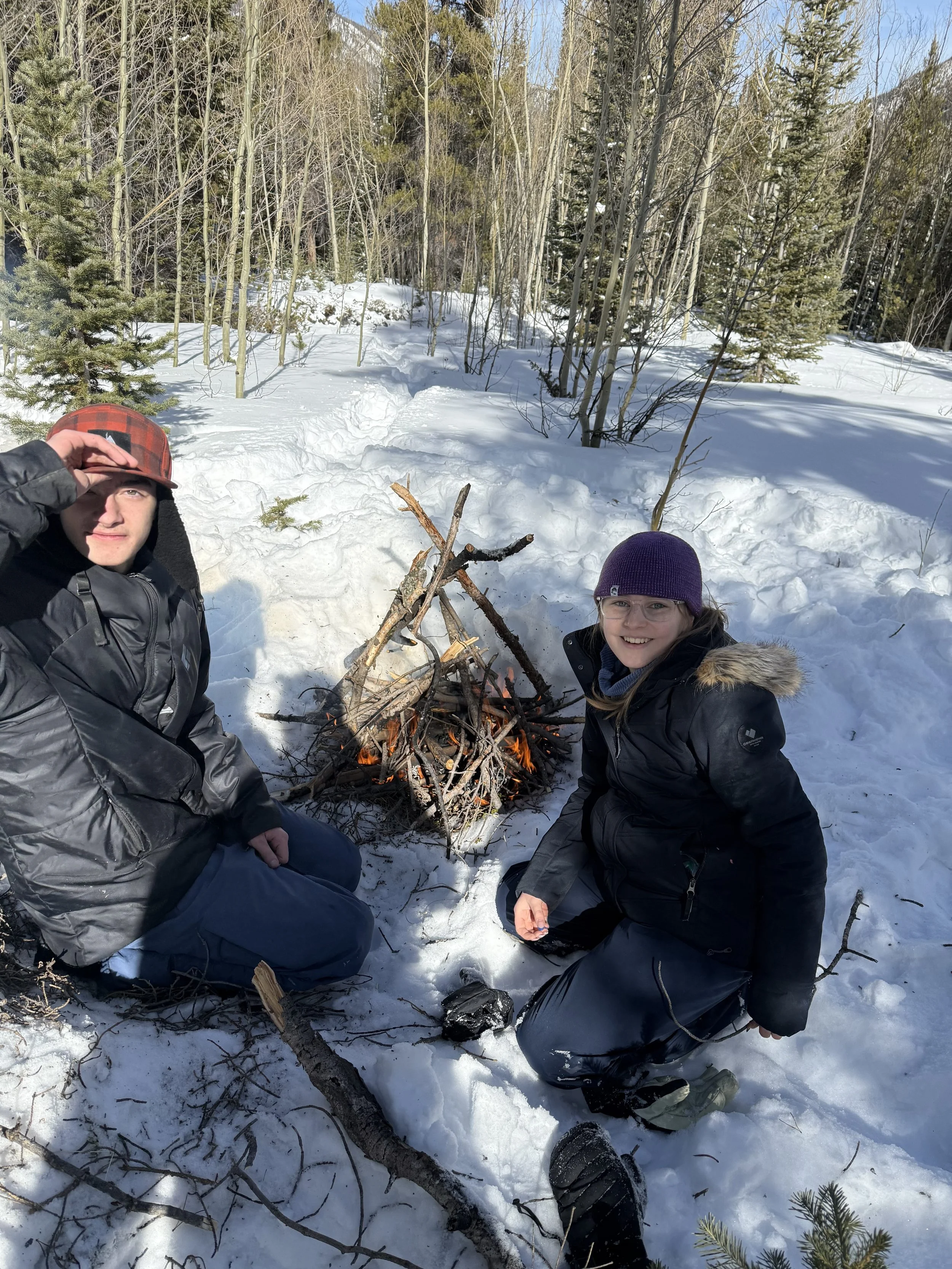
After constructing their shelters, students faced a second test: build a functional fire using just one match.
This activity emphasized preparation, patience, and shared responsibility. Success required thoughtful planning, clear roles, and steady execution — and if the group succeeded, they earned a well-loved outdoor tradition: s’mores around the fire.
Why Outdoor Education Matters
Research consistently shows that outdoor and experiential education plays a powerful role in student development. Studies have found that learning in outdoor environments can:
Improve problem-solving and critical-thinking skills
Increase student engagement and motivation
Build resilience, confidence, and adaptability
Strengthen collaboration and leadership skills
Support social-emotional learning and well-being
Experiential learning models, particularly those that involve challenge and reflection, help students retain knowledge more deeply by connecting learning to lived experience. Outdoor education also encourages students to take healthy risks, manage uncertainty, and develop self-efficacy, skills that extend far beyond the mountain.
Learning That Sticks
Mountain Days like this one reflect The Peak School’s commitment to educating the whole student. By combining academic rigor with meaningful, real-world experiences, students are given opportunities to practice leadership, perseverance, and teamwork in authentic settings.
Whether they’re building a shelter as the sun sets or working together to coax a fire from a single match, Peak students are learning lessons that stay with them…long after the snow melts.